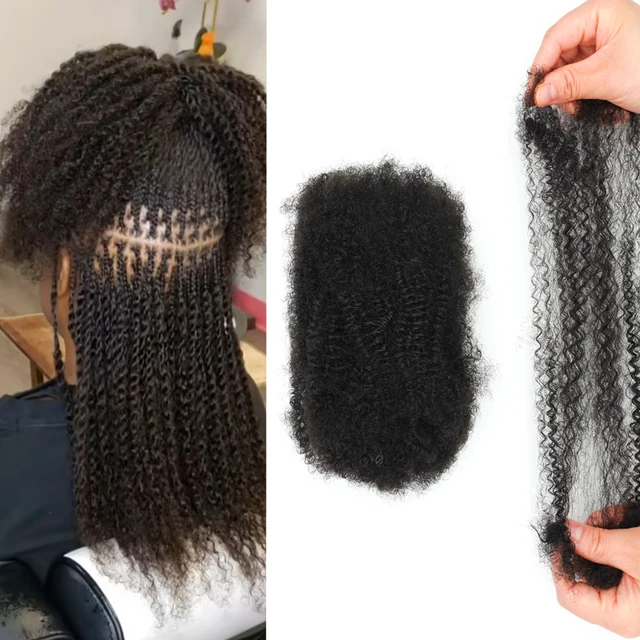
Buyers sometimes treat pre-stretched and loose bulk as the same product in different packaging, and order whichever is cheaper that month. Stylists know better: the two formats behave differently from the first minute of preparation and produce a visibly different finished loc.
1. Prep Time and Density Predictability
Loose afro kinky bulk must be separated and stretched by the stylist before it can be worked into the loc. That step gives fine control over density but consumes chair time and introduces stylist-to-stylist variation. Pre-stretched bulk arrives with that step already done, so density is broadly predictable bundle to bundle. On a salon floor running multiple stylists against a fixed service time, this predictability is worth more than the small unit price difference.
2. Finished Loc Character
Loose bulk, properly separated, produces a softer and more organic loc surface with more visible individual fibre movement. Pre-stretched bulk produces a denser, more uniform surface and takes on a cleaner, more consistent silhouette. Neither is superior. The choice should follow the look the salon sells: organic and softer for editorial or natural finishes, denser and more uniform where the menu promises a defined, polished loc.
3. Holding Both Formats Without Wasting Stock
Stock both formats but assign them to different menu lines rather than treating one as a substitute for the other. Keep the pre-stretched line for fixed-time bookings and high-volume days, and reserve loose bulk for consultation appointments where the client wants a specific shape. That split keeps chair time predictable while still letting the salon quote the more organic finish, and it prevents the common situation where a stylist reaches for the wrong format because only one was in the store room.