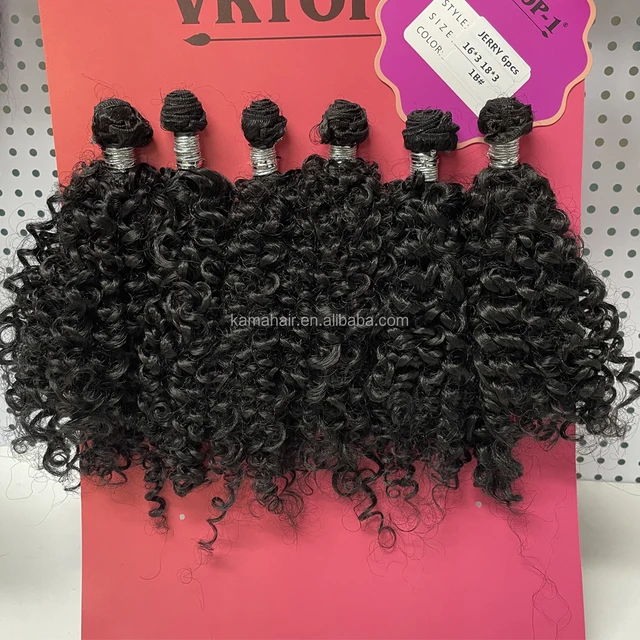
Mixed human and synthetic blend bundles are the workhorse of a mid-tier curl menu. They let a salon quote a full curly install at a price point that a pure human hair menu cannot reach. The category only works, however, when the curl pattern and blend ratio are matched to how the service is sold and maintained.
1. Curl Pattern to Menu Mapping
Build the menu around curl pattern families rather than product names. Clients choose visually, so a salon that stocks two clearly distinct jerry curl patterns and can show both on a reference card will convert far more appointments than one that stocks five patterns that read almost the same. Keep the stock list short, make the difference obvious, and price each pattern against the maintenance commitment it carries.
2. Blend Ratio and Heat Tolerance
The higher the synthetic proportion, the more heat-sensitive the bundle becomes and the shorter its usable life under repeated styling. That is a real limit, not a defect, and it should be stated at the consultation. Where a client intends to heat-style regularly or wants the install to survive several months, steer them to a higher human content option, and keep the blend tier for clients who want the look at a lower entry price and will replace it sooner.
3. Costing the Menu Tier Honestly
Price the blend tier against its replacement cycle rather than pretending it matches human hair longevity. When a client understands that the mid-tier option costs less up front and is refreshed more often, dissatisfaction drops sharply, and the salon gains a predictable repeat service interval. That repeat interval, not the first ticket, is what makes a blend tier profitable.