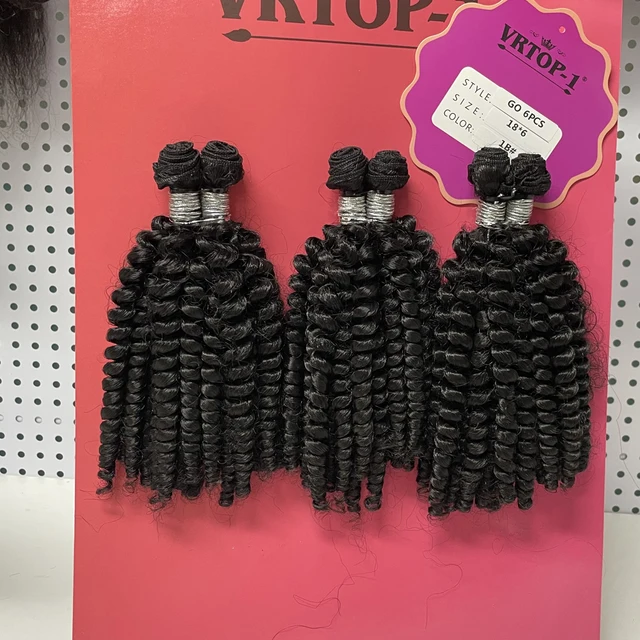
A funmi curly install and a bulk feed-in install can produce a nearly identical silhouette from across the salon, but they behave nothing alike once the client is in the chair or once the refill appointment arrives. Choosing between them is a scheduling and margin decision as much as a styling one.
1. Installation Time Comparison
Bundle-based installation follows a fixed sequence: prepare the base, attach the bundle rows, then blend. Because the bundle already carries the curl pattern and volume, the stylist's time goes into placement rather than shaping. Bulk feed-in is the opposite. The stylist builds the shape strand by strand, which gives finer control over how the curl sits around the face and crown, but the time cost scales directly with how much volume the client wants. For a heavy, high-density finish, the bundle route normally wins on chair time.
2. Volume Control and Finish Consistency
Bundle volume is predictable, which is exactly why salons like it for clients who book on a fixed price menu: the same number of bundles produces substantially the same result every time. Bulk feed-in offers more control but introduces stylist-dependent variation. If a salon runs several stylists on the same menu, bundles reduce the variation between chairs and make quoting straightforward.
3. Refill Economics Across the Life of the Style
Model the style across its whole life, not just the first appointment. Bundle installations are easier to refresh in place, so the refill is shorter and consumes fewer bundles than a fresh install. Bulk feed-in often needs more material replaced at each refill because the blend has to be rebuilt. Salons that price the refill as a separate service line and stock bundles specifically for that line usually find the material cost per client falls noticeably over the second and third appointment.