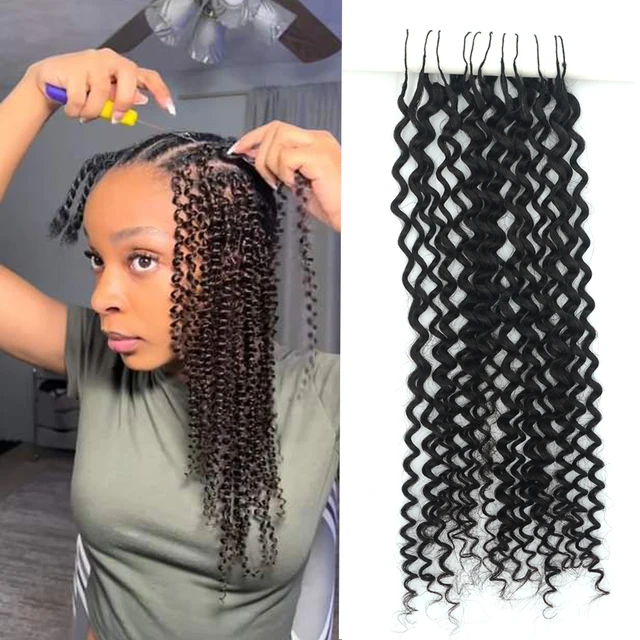
Feather-tip crochet braids sell on one promise to the client: weightlessness. For the buyer, the origin of the fibre changes how that promise is delivered, and origin is the single specification most often left vague on a purchase order.
1. Hand-Feel and Cuticle Density
Cuticle density, not strand thickness, drives hand-feel. Fibre with a denser cuticle layer reads heavier and smoother in the hand, while fibre with a lighter cuticle layer moves more freely and is better suited to feather-tip construction where the taper must stay airy. Buyers should request a sealed hand-feel sample of each origin before setting a category, because the difference is immediately obvious to a loctician but invisible on a specification sheet.
2. Weight per Length and Price Positioning
Feather-tip crochet work consumes less fibre per head than a heavy braid installation, which is exactly why the category tolerates a higher price per bundle. Salons selling this service usually position it as a premium lightweight option rather than a volume braid, so the material cost per client stays inside a healthy margin even at the upper end of the bundle price band. Buyers should model cost per head rather than cost per bundle when choosing origin.
3. Specifying Feather-Tip Consistency
The taper is the product. A purchase order should state the taper length and confirm that the feathering is a true gradual reduction rather than a blunt cut. Ask for the taper specification in writing and inspect a full bundle rather than a pulled sample, since inconsistency in feathering is what stylists notice first and what generates return requests.