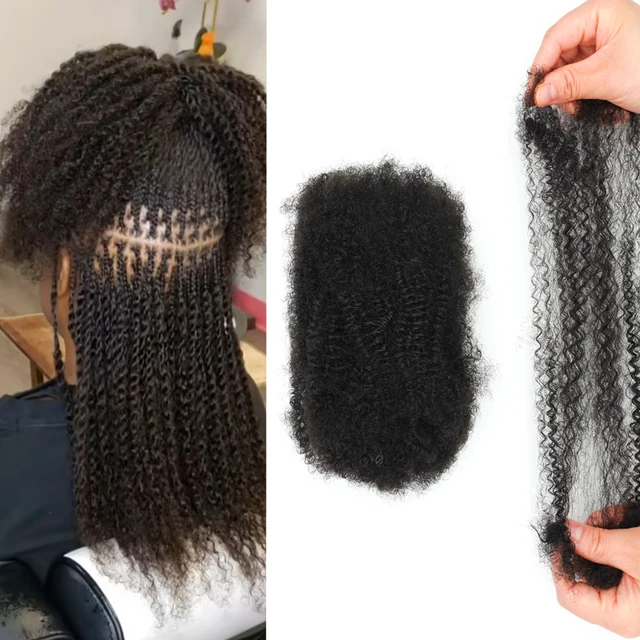
Most salons inspect bulk hair by looking at it, which catches almost nothing. Shedding, the defect that actually drives client complaints, is invisible until the fibre is worked. A short, repeatable inspection protocol at receiving turns a subjective judgement into a pass or fail decision.
1. The Shed Pull Test
Take a bundle from the middle of the carton, not the top. Separate a small section, grip it firmly near the root end, and run a wide-tooth comb through it with steady, moderate tension five times. Count the strands left on the comb. A small number of loose strands is normal in any bulk product; a growing quantity on each pass indicates the fibre was cut from mixed or misaligned sections, and that bundle will shed through an entire installation.
2. Sink-Float and Fibre Mixedness
Place a small section in a bowl of lukewarm water and observe how it settles. Human hair wets and sinks gradually and evenly. Sections that float persistently or settle in oddly separated bands often indicate blended synthetic content or residual processing coating. This is a quick screening step, not a laboratory test, but it reliably flags the cartons worth inspecting more closely.
3. Three-Tier Rework Grading
Grade every carton as floor stock, rework stock or claim stock. Floor stock goes straight to the service area. Rework stock is usable for practice work or for styles where the section is cut short, and should be labelled accordingly so it is never pulled for a paying client. Claim stock is kept intact, photographed and left sealed while the claim is raised with the supplier. Applying the same three tiers consistently is what makes the grading meaningful across shipments.