The Complete 2026 Human Hair Wig Wholesale Sourcing Bible: From Lace Types to MOQ Math — Everything a Salon Owner Needs Before Placing a Factory Order

If you run a salon, you already know: the wig you source determines the client you keep. A poorly constructed wig costs you more than the wholesale price — it costs you the client’s trust, her referrals, and her repeat business. This guide is written for salon owners, dreadlock artists, and B2B buyers who want to source human hair wigs like a professional buyer — not like a first-time Alibaba browser.
At KAMA Hair, we have spent years manufacturing human hair wigs for wholesale buyers across North America, Europe, and Africa. This sourcing bible distills everything we have learned about wig construction, materials, and wholesale economics into one comprehensive reference. By the end of this guide, you will know exactly what to ask a factory before placing your first order.
Chapter 1: Glueless Construction — The 2026 Revolution
Glueless wigs are the single most important innovation in the protective style industry since the invention of lace fronts. Unlike traditional wigs that require adhesive, tape, or glue for installation, a glueless wig stays secure through a combination of adjustable straps, combs, and an elastic band system built directly into the cap.
The value proposition for your salon is immediate: a glueless wig installs in 90 seconds to 3 minutes, compared to 20-45 minutes for a glued lace front. This translates directly to chair turnover. If your chair generates $200 per hour in service revenue, saving 35 minutes per wig installation means approximately $116 in recovered revenue per client — on top of the wig markup.
What makes a wig truly “glueless”:
- Adjustable elastic band — runs along the perimeter of the cap, adjustable via velcro or hook-and-loop at the nape. This is the primary anchor. Without it, the wig relies on combs alone (unreliable for all-day wear).
- 4-point comb system — combs at the front, sides, and back. Quality matters: sewn-in metal combs last 6+ months; glued-in plastic combs detach after 4-6 weeks of daily wear.
- 3D dome cap — a contoured cap that follows the natural curve of the scalp. Flat caps (cheap construction) create a “mushroom top” effect that your clients will hate. A 3D dome sits flush, creating a natural silhouette even without glue.
- Pre-plucked hairline with baby hairs — the hairline is hand-tied to mimic natural hair density variation. Without this, even a perfectly secured glueless wig will look artificial at the hairline — the one place every client checks in the mirror.
Glueless vs. Glued: The Salon Economics
| Factor | Glueless Wig | Traditional Glued Wig |
|---|---|---|
| Install Time | 90 sec – 3 min | 20 – 45 min |
| Client Can Self-Install? | Yes — repeat retail sales | Rarely — return visits required |
| Scalp Damage Risk | Zero | Moderate-High (adhesive irritation) |
| Reusability | Daily wear for 6+ months | Requires reapplication every 1-2 weeks |
| Client Satisfaction Source | Convenience + natural look | Flawless install (stylist-dependent) |
Actionable takeaway: For your August 2026 back-to-school inventory, prioritize glueless wigs at a 3:1 ratio over traditional lace fronts. The client who can install her own wig between classes is the client who buys a second wig for weekends. Self-install capability drives repeat retail sales.
Chapter 2: Lace Types — HD Swiss, Transparent, and Normal Lace Decoded
The lace is the most visible part of any human hair wig, and yet it is the component most wholesale buyers skip over. Here is the definitive breakdown:
HD (High Definition) Swiss Lace — The current gold standard. Ultra-thin (0.03-0.06mm), nearly invisible against all skin tones without makeup or tinting. HD lace is hand-made in Switzerland and accounts for approximately 15-20% of the wholesale cost premium over standard lace. For salon retail: HD lace wigs command a 30-50% higher retail markup because the “undetectable hairline” is the #1 concern of first-time wig buyers.
Transparent Lace — Mid-range option (0.06-0.08mm). Slightly more visible than HD but still blends well on lighter to medium skin tones. Cost difference vs HD: approximately $8-15 per wig at wholesale. The practical compromise for salons that serve a broad demographic.
Normal/Brown Lace — The economy option (0.10-0.15mm). Visible without concealer or foundation on most skin tones. Suitable for: full-coverage styles (bangs, side-swept), or clients who always wear makeup along the hairline. Not recommended for “slick back” or “exposed hairline” styles.
What to ask your factory: “Is this HD Swiss lace or standard Swiss lace?” Many listings say “HD Lace” but use standard Swiss lace. Genuine HD lace has a barely-visible grid pattern under magnification. If the factory cannot confirm the lace origin (Swiss vs Korean vs Chinese), assume standard grade.
Chapter 3: Density Charts — 130% to 250% Explained
Wig density is the single most misunderstood specification in wholesale purchasing — and the one that most directly determines whether your client loves or returns her wig.
Density is measured as a percentage of “average natural hair density.” Here is what each level actually means for your client:
- 130% Density — Light, natural, suitable for everyday wear. Comparable to fine to medium natural hair. Best for: older clients, professional settings, “I want it to look like my real hair” requests.
- 150% Density — The “sweet spot” for natural-looking volume. Full enough to cover tracks and wefts, light enough to move naturally. This is the most commonly ordered density for salon retail wigs.
- 180% Density — Full, glamorous volume. Noticeably thicker than natural hair. Best for: special occasions, photo shoots, clients who want a “done” look without layering. This density sells well for weddings and events.
- 200-250% Density — Ultra-glam, maximalist volume. Heavy on the head (8-12oz vs 4-6oz for 150%). Requires a secure cap construction (full lace or 360 lace). Market: celebrity-inspired looks, drag performance, editorial. Niche but high-margin.
Density + Length interaction: A 150% density 10-inch bob and a 150% density 26-inch waist-length wig are not the same product. Longer hair requires fewer strands to achieve the same “visual fullness” because the weight pulls the hair flatter. For lengths over 22 inches, order 180% density minimum to avoid a “stringy” look. For lengths under 14 inches, 130-150% is sufficient — 180% on a bob looks helmet-like.
Chapter 4: Cap Construction — Full Lace, Lace Front, 360, U-Part
Cap construction determines three things: how the wig looks (naturalness), how it feels (comfort), and how your client wears it (styling versatility). Here is the complete taxonomy:
Full Lace Cap — Entire cap is hand-tied lace. Every strand is individually knotted. Advantages: can be parted anywhere, styled in any direction including high ponytails, most breathable. Disadvantages: most expensive (2-3x standard cap), requires the most skilled manufacturing (longer lead times), delicate (requires careful handling). Best for: premium salon retail at $200-400+ price point.
Lace Front Cap — Lace panel from ear to ear across the front hairline (typically 4×4 or 13×4 inches); the rest of the cap is machine-wefted. Advantages: natural hairline at 50-60% of full lace cost, durable back section. Disadvantages: cannot wear in a high ponytail (machine wefts visible at the back), parting only within the lace panel. Best for: the 80% of wig buyers who wear their hair down or in low styles.
360 Lace Cap — Lace around the entire perimeter (360 degrees), with machine wefts in the crown. Advantages: can wear in a high ponytail (lace at the back nape), more affordable than full lace. Disadvantages: cannot part in the crown (machine wefts), the “halo” of lace can sometimes be visible under bright light. Best for: active clients who alternate between up and down styles.
U-Part / V-Part Cap
Cap Size Note: Standard cap circumference is 22.5 inches. If your clientele includes women with larger head sizes, ask your factory about “large cap” options (23-23.5 inches). A too-tight cap causes headaches and returns; a too-loose cap slides and creates gaps.
Chapter 5: Hair Origins — Brazilian, Peruvian, Indian, Malaysian, Vietnamese
The country of origin determines the hair’s texture, thickness, and longevity — and different origins suit different wig styles:
- Brazilian Hair — Thick, coarse strand diameter, naturally full-bodied. Holds curls exceptionally well in humid conditions. Best for: voluminous styles, curly textures, clients in humid climates. Brazilian hair is the most popular origin for Afro Kinky and Curly wig textures because the natural strand thickness creates authentic-looking volume.
- Peruvian Hair — Lighter and softer than Brazilian, with a natural luster. Blends exceptionally well with relaxed or chemically treated hair. Best for: silky straight and body wave styles, clients transitioning from relaxed to natural.
- Indian Hair — Fine to medium strand, naturally straight to wavy, versatile. The workhorse of the wig industry. Takes color well, available in the widest variety of textures. Best for: virgin straight, body wave, and loose wave wigs. Indian Remy is the most cost-effective premium origin for salon retail.
- Malaysian Hair — Silky, naturally straight, heavier than Indian hair. Excellent shine without appearing synthetic. Best for: sleek straight styles, Yaki textures (imitates relaxed African American hair).
- Vietnamese Hair — Thick single-donor strands, naturally straight with body. Minimal processing required (often sold as “raw” or “unprocessed”). Best for: raw hair wigs, clients who want maximum longevity (12-18 months with proper care).
Remy vs Non-Remy: Always source Remy hair for salon-grade wigs. Remy means the cuticles are aligned in the same direction (root to tip), which prevents tangling. Non-Remy hair has mixed cuticle directions, tangles within 2-4 weeks, and generates returns. The price difference at wholesale is approximately $20-40 per wig — and the return-rate difference is approximately 15-30%.
Chapter 6: MOQ & Wholesale Math — Unit Economics for Salon Buyers
The most common question we receive from first-time wholesale buyers: “What is your MOQ, and is it worth it?” Here is how to calculate whether a wholesale order makes financial sense for your salon:
Sample MOQ Economics (based on KAMA Hair W01 Glueless Wig):
- Wholesale price per unit: $35 (mid-range estimate)
- MOQ: 2 pieces
- Total wholesale cost: $70
- Shipping (DHL/FedEx express): $20-30
- Landed cost per unit: $45-50
Salon retail pricing:
- Wig retail price: $120-180 (2.5-4x markup, industry standard for premium human hair)
- Installation service: $50-75 (glueless = 3-minute install, high chair turnover)
- Total client charge: $170-255
- Gross profit per unit: $120-205
- Gross margin: 70-80%
Break-even analysis for a 10-unit order:
- Total landed cost: $450-500
- Break-even at: 3 units sold at $170 each
- Profit on remaining 7 units: $840-1,435
- ROI: 168-287%
The key insight: The MOQ of 2 pieces is NOT a burden — it is a test-drive. You can sample two different lengths or densities, see which sells faster, and then scale. A salon that orders 2 units, sells them in 2 weeks, and reorders 6-10 units has validated demand with $70 of risk. This is the model that successful salon buyers use.
Chapter 7: Kama Wig Product Line Comparison
KAMA Hair offers a complete range of human hair wigs for every salon niche. Here is how to match the right wig to the right client:
Entry-Level / First-Time Wig Buyer: W04 Brazilian Afro Kinky Curly Short Wig ($15-30 wholesale). Short length reduces the intimidation factor. Kinky texture blends with natural 4A-4C hair. Low price point converts walk-in clients from “just looking” to “let me try.”
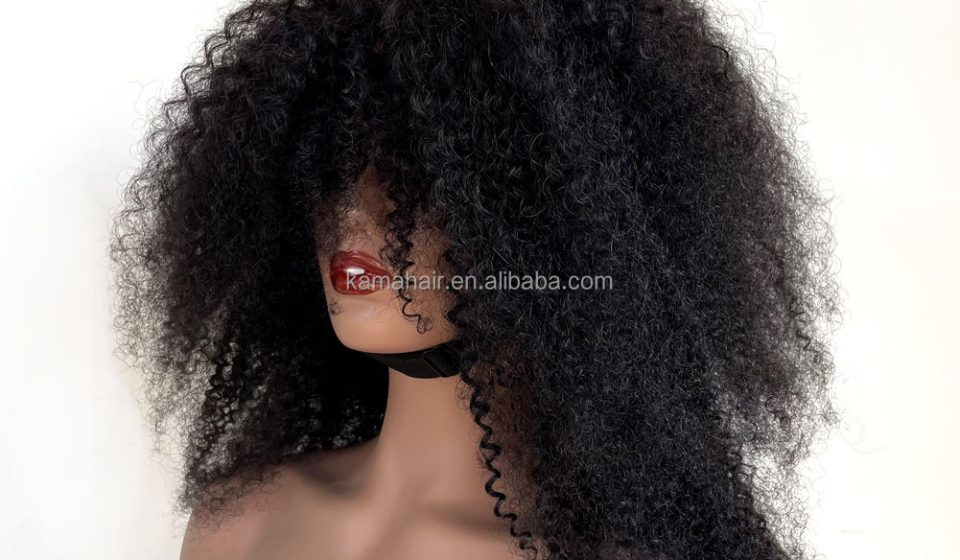
Everyday Natural Look: W01 Glueless Afro Kinky Curly Wig with Bangs ($15-70 wholesale). Pre-styled bangs eliminate the styling learning curve. Brazilian Remy ensures natural movement. Glueless = client can self-install at home = she buys a second one for color variety.
Premium / Special Occasion: W09 10A Grade 150-180% Density HD Full Lace Wig ($80-200+ wholesale). HD full lace = maximum styling versatility. 150-180% density = red-carpet volume. This is the wig for weddings, graduations, and photo shoots — the highest-margin category in salon retail.
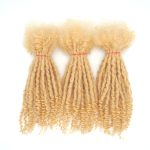
Locs / Dreadlock Alternative: W08 Locs Wig (Crochet Locs Style). Full dreadlock aesthetic without the 8-hour install or permanent commitment. Best for: clients who want to “try” locs before committing, or clients whose natural locs are in the awkward growth phase.
Quick Transformation / Salon Upsell: W02 Short Bob Wig and W06 Straight Bob Wig. Bob-length = universally flattering. Quick install = chair turns in 15 minutes. The ideal upsell when a client is already in your chair for a silk press or trim.
The full Kama Wig collection spans 10 SKUs covering every price point ($15-200+), every length (8-26 inches), and every cap type (full lace, lace front, glueless, U-part). For the complete line card with current wholesale pricing and MOQ, visit our Alibaba store.
Chapter 8: 2026 Trends & Back-to-School Forecast
As we enter August 2026, three macro trends are reshaping salon wig demand:
1. Glueless Dominance (Growth: +40% YoY). Google search volume for “glueless wig” has grown 40% year-over-year. TikTok #GluelessWig has 890M+ views. The driver: Gen Z and young millennial clients prioritize scalp health and the ability to remove/swap wigs daily. For back-to-school: glueless wigs are the #1 request from college students who need to go from 8am lecture to 6pm gym without a wig emergency.
2. Afro-Textured Wigs (Growth: +35% YoY). The natural hair movement has matured from “I wear my natural hair” to “I wear wigs that match my natural texture.” Afro Kinky and Curly wigs — not straight, not body wave, not Yaki — are the fastest-growing texture category. Your August inventory should lean 60%+ toward curly/kinky/coily textures.
3. “Protective Style Rotation” (New Consumer Behavior). Clients no longer choose ONE protective style. They maintain a rotation: glueless wig for weekdays, crochet locs for weekends, drawstring ponytail for the gym. This behavior multiplies the per-client product consumption by 2-3x. Salons that stock complementary categories (wigs + wefts + ponytails from the same factory) capture this rotation revenue instead of losing it to Amazon.
Back-to-School Action Plan (August 2026):
- Audit your current inventory: count how many glueless wigs vs. traditional lace fronts you have. If the ratio is under 2:1, rebalance before August 15.
- Order a test batch of curly/kinky wigs in 14-18 inch lengths (the most requested “first wig” length for students).
- Display a “3-Minute Install” demo on your salon’s Instagram/TikTok the week before school starts — the visual of a glueless wig going on in 90 seconds converts browsers into appointment bookers.
- Bundle: offer a “Back-to-School Protective Style Kit” (glueless wig + satin bonnet + edge brush) at a package price. The bundle margin covers your shipping cost on the wig.
This guide was written by the KAMA Hair product team. We are a factory-direct manufacturer of human hair wigs, bulk hair, dreadlocks, wefts, and braiding hair extensions, serving salons and B2B buyers in 40+ countries. For current wholesale pricing, MOQ, and lead times on any product in this guide, contact us directly.